Cannabis Basics
Your Body Was Built for Weed
Honest notes from 900+ dispensary visits. Zero sponsored posts.
Get the lists
Here's a sentence that would have gotten a scientist laughed out of a conference in 1985: your body manufactures its own cannabis.
Not metaphorically. Not "kind of like cannabis." Your brain and your gut and your immune system are all running on a network of receptors and chemical signals that are so structurally similar to the compounds in a cannabis plant that when scientists finally discovered them in 1992, they named the whole damn system after weed.
It's called the endocannabinoid system. And understanding it - even loosely, even with a joint in your hand and one eye closed - is the single most useful thing you can learn before walking into a Bangkok dispensary.
In the early '90s, an Israeli chemist named Raphael Mechoulam - the same guy who'd isolated THC decades earlier - found something nobody expected. The human body produces its own cannabis-like molecules. The first one he identified? He named it anandamide, from the Sanskrit word ananda, meaning bliss.
Let that land for a second. The man who unlocked the chemistry of getting high looked at what the body does on its own and called it bliss.
Anandamide is an endocannabinoid - "endo" meaning "from within." Your body makes it, uses it, and breaks it down as part of a continuous cycle that keeps you functioning. It helps regulate your mood, your sleep, your appetite, your memory, how you process stress, and your immune response. The receptors it binds to - called CB1 and CB2 - are found on nearly every organ in your body. CB1 receptors are the most abundant receptor type in the entire brain.
That's not a footnote. That's the headline. The most common receptor in your brain is built to interact with cannabinoids.
Think of the endocannabinoid system as your body's thermostat. Not for temperature - for everything. Stressed? It dials down the stress response. Inflammation spiking? It taps the brakes. Pain signals running hot? It modulates them. The technical word is homeostasis - keeping things in balance. But the plain-language version is: this system exists to make sure you don't redline.
Here's where it gets interesting for anyone who's ever wondered why weed works.
When you smoke a joint or eat an edible, the THC in that product mimics your endocannabinoids. It binds to the same CB1 receptors that anandamide binds to. Your body doesn't know the difference - it just sees a cannabinoid and responds. That's why cannabis can calm you down, ease pain, shift your mood, or make a sunset look like a religious experience. It's plugging into a system that was already there, already running, already doing this job with its own molecules.
CBD, the non-psychoactive cannabinoid, works differently. It doesn't bind directly to CB1 receptors - instead, it blocks the enzyme that breaks down anandamide. Translation: CBD doesn't add more bliss. It makes your body's own bliss last longer.
And this is where the conversation gets real for anyone standing in a Bangkok dispensary trying to figure out what the hell to buy.
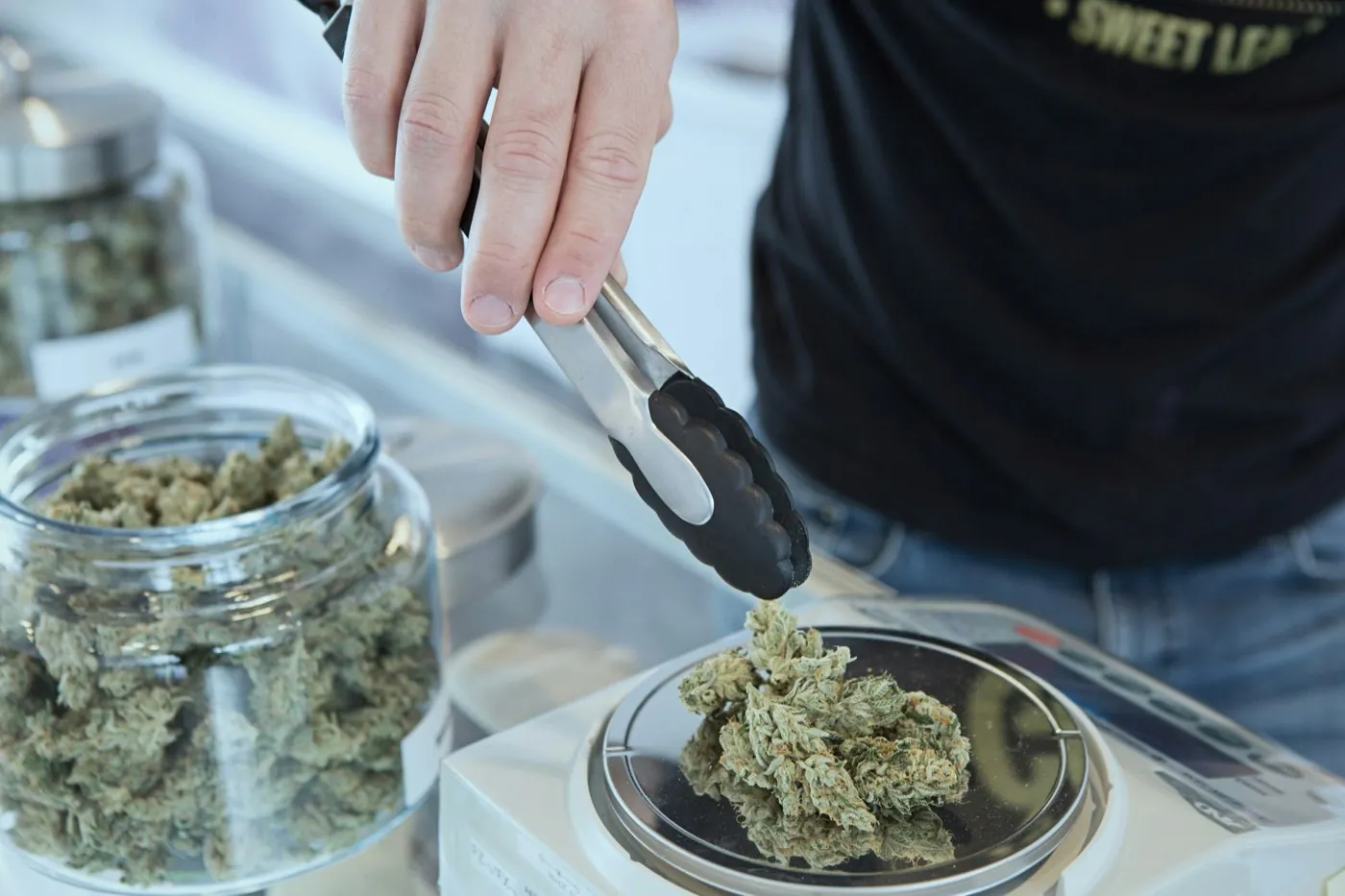
I've been to over 900 dispensaries across Thailand. I've watched people buy the same strain, from the same jar, on the same afternoon - and walk out with completely different experiences. One person melts into the couch. The other reorganizes their hotel room and writes three pages of travel journal. Same weed. Same dose. Wildly different outcomes.
The endocannabinoid system is why.
Your ECS is as unique as your fingerprint. It's shaped by your genetics, your age, your stress levels, your sleep quality, your diet, even how much you exercise. Omega-3 fatty acids are literally precursors to endocannabinoid production - your body can't build the bliss molecules without the right raw materials. Someone who slept eight hours, went for a swim, and had a proper meal is running a different internal chemistry than someone who's jetlagged, hungover, and running on 7-Eleven coffee.
This is the science behind something I say constantly: it's not about cannabis. It's about cannabis for you.
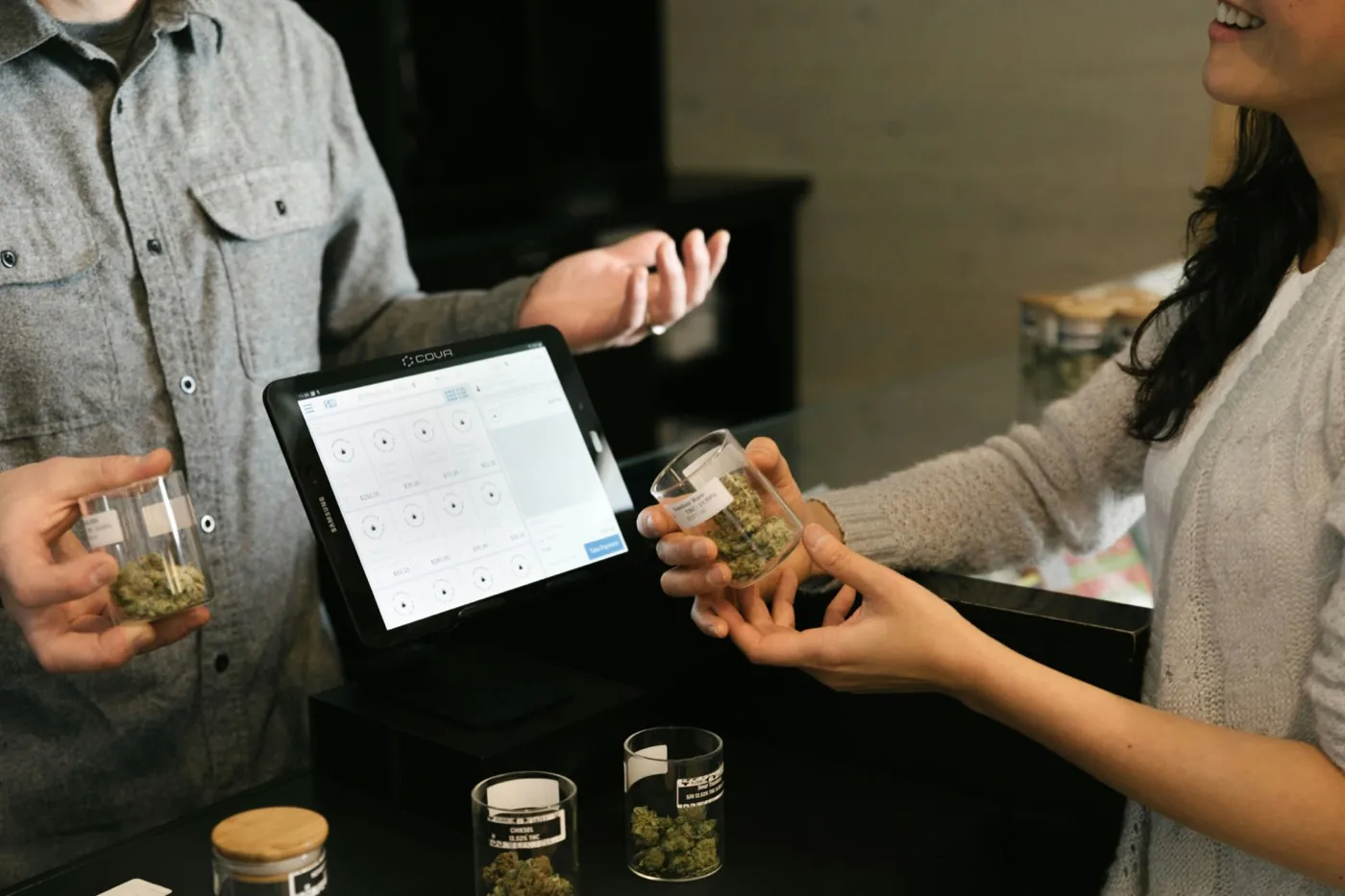
If you're shopping at 3pm on a Wednesday and you want to stay productive, your ECS is in a different state than if you're shopping at 9pm on a Friday and you want to dissolve into a beanbag. A good budtender - and I mean a genuinely knowledgeable one, not the guy who memorized three strain names this morning - understands this intuitively even if they couldn't name the receptor. They'll ask you what you want to feel, not just what you want to buy.
The shops on ThaiCannaMapped's Mindful High list (our wellness-first dispensary picks) are the ones that get this. They're not selling you the most expensive gram on the shelf. They're matching the product to the person. It's a different experience entirely.
Here's the part most cannabis-positive content conveniently skips: the endocannabinoid system can be overwhelmed.
When you flood CB1 receptors with THC - daily, repeatedly, in high doses - your body adapts. It reduces the number of available receptors. This is called downregulation, and it's the reason regular users build tolerance. The same joint that sent you to space three months ago now barely shifts the dial. So you smoke more. Which causes more downregulation. Which means more tolerance. And eventually, if you stop suddenly, your body's own endocannabinoid signaling is disrupted - which is why cannabis withdrawal is a real thing, even if it won't kill you.
The good news? PET scans show that after a period of abstinence, your cannabinoid receptors come back. The system resets. The thermostat recalibrates. Your body wants to return to balance - that's literally its job.
This is why dose matters more than most people think. Low-dose THC can reduce anxiety. High-dose THC can increase it. The relationship isn't linear - it's a curve, and the peak is lower than your ego wants it to be. If you've ever smoked too much and felt your heart race, that wasn't a flaw in the weed. That was your endocannabinoid system saying that was too much signal.
All of this - the receptors, the bliss molecules, the thermostat - boils down to a few things that matter when you're standing in a shop on Sukhumvit with a menu you can't decode:
Start lower than you think you need to. Your ECS doesn't care about your pride. It cares about signal strength. One puff, wait fifteen minutes. Especially with Thai-grown flower, which has gotten remarkably potent in the past couple of years.
What you did today matters as much as what you buy. Slept well, ate real food, feeling calm? Your ECS has headroom. Jetlagged, anxious, dehydrated? Your system is already redlining - adding THC to that is how people end up on the bathroom floor of a Khao San Road hostel.
Ask the budtender questions and watch their eyes. The good ones light up when you ask about terpenes or effects. The bad ones glance at the back room. After 900 visits, I can read that look from the doorway. The endocannabinoid system might sound like a lecture, but in practice, it's the difference between a budtender who asks "what do you want to feel?" and one who asks "how many grams?"
I've been documenting all of this - the shops that get it right, the ones that don't, the science underneath it all - over on Instagram. The deeper conversations about what this plant actually does and what the industry owes to the people who use it happen inside Reefers Club, an invite-only community of people who take this seriously.
And on the industry side, Thailand's cannabis marketing is evolving fast. In my own brand and content work with licensed shops, clarity and compliance come first, which matters when the product you are marketing interacts with the most abundant receptor in the human brain.
Here's the thing that hit me hardest the first time I read the research: we didn't discover cannabis and then build a system for it. We had the system first. For millions of years. In every mammal on earth - dogs, cats, horses, the works. The endocannabinoid system was keeping bodies in balance long before the first human ever put fire to flower.
Cannabis didn't invent the lock. It just happens to be a key that fits.
Understanding that doesn't make you a pharmacologist. But it does make you a smarter consumer. And in a city with thousands of options and no shortage of people willing to sell you whatever's on the shelf - that matters.
Written by someone who has visited an unreasonable number of Bangkok dispensaries and reads too many neuroscience papers for his own good.
This article is for educational purposes only and does not constitute medical advice. Cannabis affects everyone differently. Always consult a healthcare professional, especially if you have pre-existing conditions. Legal cannabis use in Thailand requires compliance with current regulations, including PT33 prescriptions. Adults 20+ only.