Hot Takes
How Cannabis Got Banned
Honest notes from 900+ dispensary visits. Zero sponsored posts.
Get the lists
I met a woman in Thailand who changed the way I think about all of this.
She's a marijuana activist. Has been for more than thirty years. She's as old as my mother. And when she told me her story, she cried.
"Some twenty-eight, thirty years ago, these guys - these white guys - they came into my kitchen. They took something from my kitchen and they said it's a drug."
She wasn't talking about something abstract. She was talking about a plant she had used her entire life. She knew which part of the plant to put in milk for her ten-year-old son when he came home sore from football practice - so his body wouldn't ache and he could sit down and focus on his homework. She knew which part to wrap in a leaf and give to her husband when he was struggling - anxious, overworked, trying to hold his family together - so he could calm down and be present with his kids.
It wasn't medicine in the way a pharmaceutical company would define it. It was something older. Something that lived in her kitchen the way garlic lives in yours.
And then one day, someone told her it was a crime.
The story of cannabis prohibition is not a story about science. It's a story about power.
For thousands of years, cannabis was cultivated across Asia, Africa, the Middle East, and the Americas for its fiber, seeds, and medicinal properties. Ancient Hindu texts describe it as a gift from the gods. Chinese medical texts prescribed it for pain relief centuries before the common era. In Thailand, it was woven into traditional medicine and cooking - a kitchen staple, not a controlled substance.
Then the twentieth century happened.
In the United States, a man named Harry Anslinger - the first commissioner of the Federal Bureau of Narcotics - needed a purpose for his new agency and a scapegoat for rising social anxieties. He found both in cannabis. Or, more specifically, in the people who used it.
Anslinger deliberately used the Spanish word marijuana instead of the scientific name cannabis to associate the plant with Mexican immigrants, who were already targets of racial prejudice. He launched a propaganda campaign - Reefer Madness, sensationalist newspaper stories, congressional testimony built on fear rather than evidence - that framed cannabis as a driver of violence, insanity, and moral decay, particularly among Black and brown communities.
By 1937, cannabis was effectively criminalized in the United States. The evidence base? Essentially nothing. The scientific community at the time actually opposed the ban. But Anslinger didn't need science. He needed fear.
The dominoes fell from there. The United States, as the dominant global superpower of the mid-twentieth century, exported its drug policy worldwide. When Richard Nixon declared a "war on drugs" in the early 1970s, he escalated what Anslinger had started. A former Nixon aide later admitted on record that the administration deliberately targeted cannabis to disrupt two communities they considered political enemies: the antiwar left and Black Americans.
The plant went from a kitchen to a courtroom. From a grandmother's remedy to a felony charge. From something that works because your body was literally built to receive it to something that could land you in a cell.
The numbers are difficult to absorb.
Since the year 2000, more than fourteen million people have been arrested for cannabis in the United States alone. As of recent counts, roughly 40,000 Americans sit behind bars for cannabis-related offenses - the vast majority for simple possession, not trafficking. Research consistently shows that Black Americans are arrested for cannabis at rates three to four times higher than white Americans, despite government data confirming that usage rates are essentially equal across races.
Those aren't just statistics. Each one is a person who lost their job, their housing, their ability to travel freely. A felony conviction for possession of a plant that is now legally sold in dispensaries across the majority of U.S. states.
The documentary "The Cannabis Question" told the story of a veteran named Sean Worsley, who used medical cannabis for PTSD after serving in Iraq. While driving through Alabama, he was stopped, arrested, and eventually sentenced to five years for possessing a third of an ounce - cannabis that had been legally prescribed to him in another state. He and his wife lost their home. He had a stroke from the stress. He said he'd rather go back to war than back to prison.
That's what prohibition did. Not to dealers. Not to cartels. To a veteran with nightmares who found something that helped him sleep.
And then there's Thailand.
In a region where cannabis possession could - and in some countries still can - carry a death sentence, Thailand did something nobody expected. In 2022, the country removed cannabis from its narcotics list, effectively decriminalizing it and creating Asia's first legal cannabis market.
It was a historic event. The first time since the early 1900s that a country in this part of the world looked at the plant and saw what that activist woman in her kitchen always saw: not a drug, but a resource.
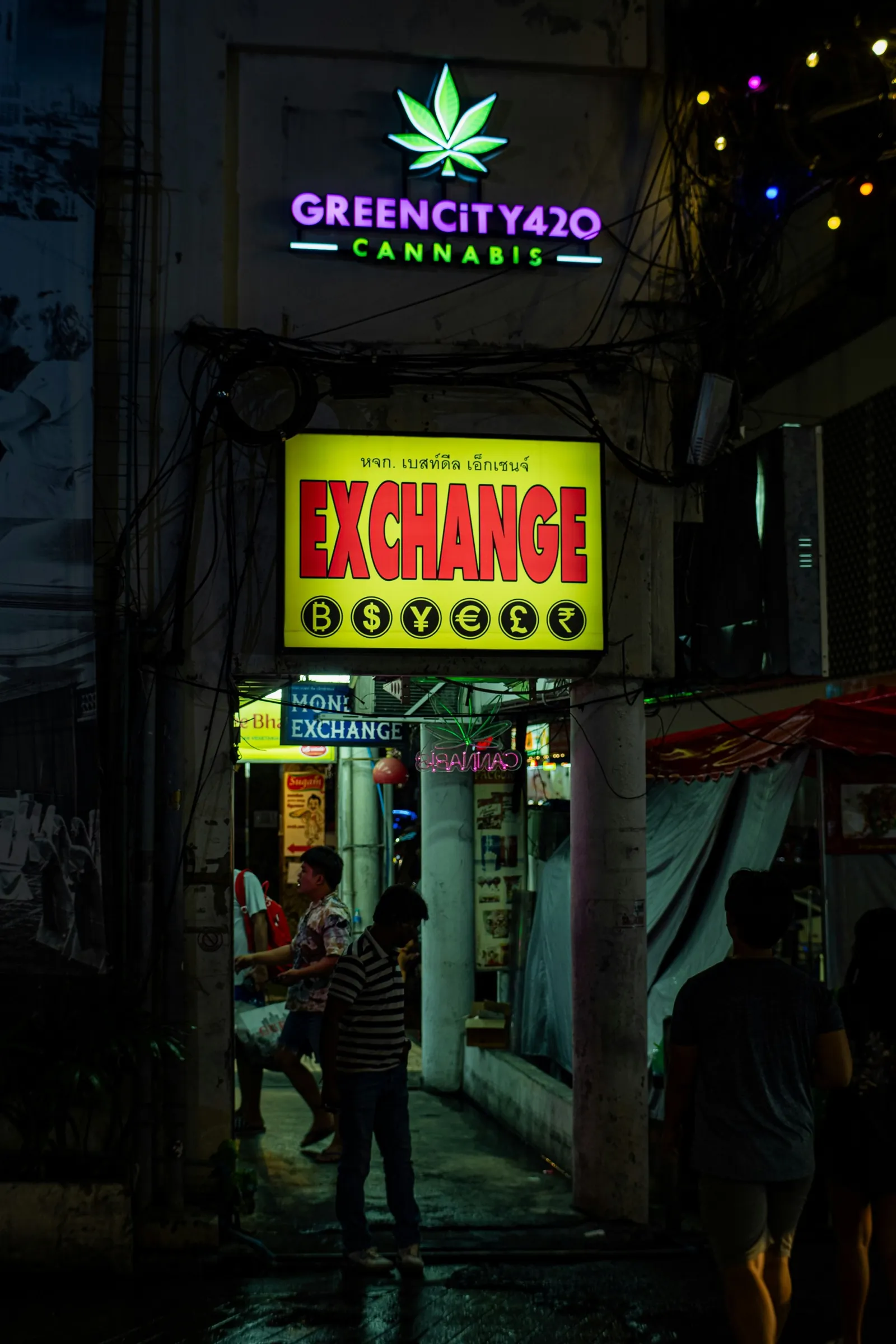
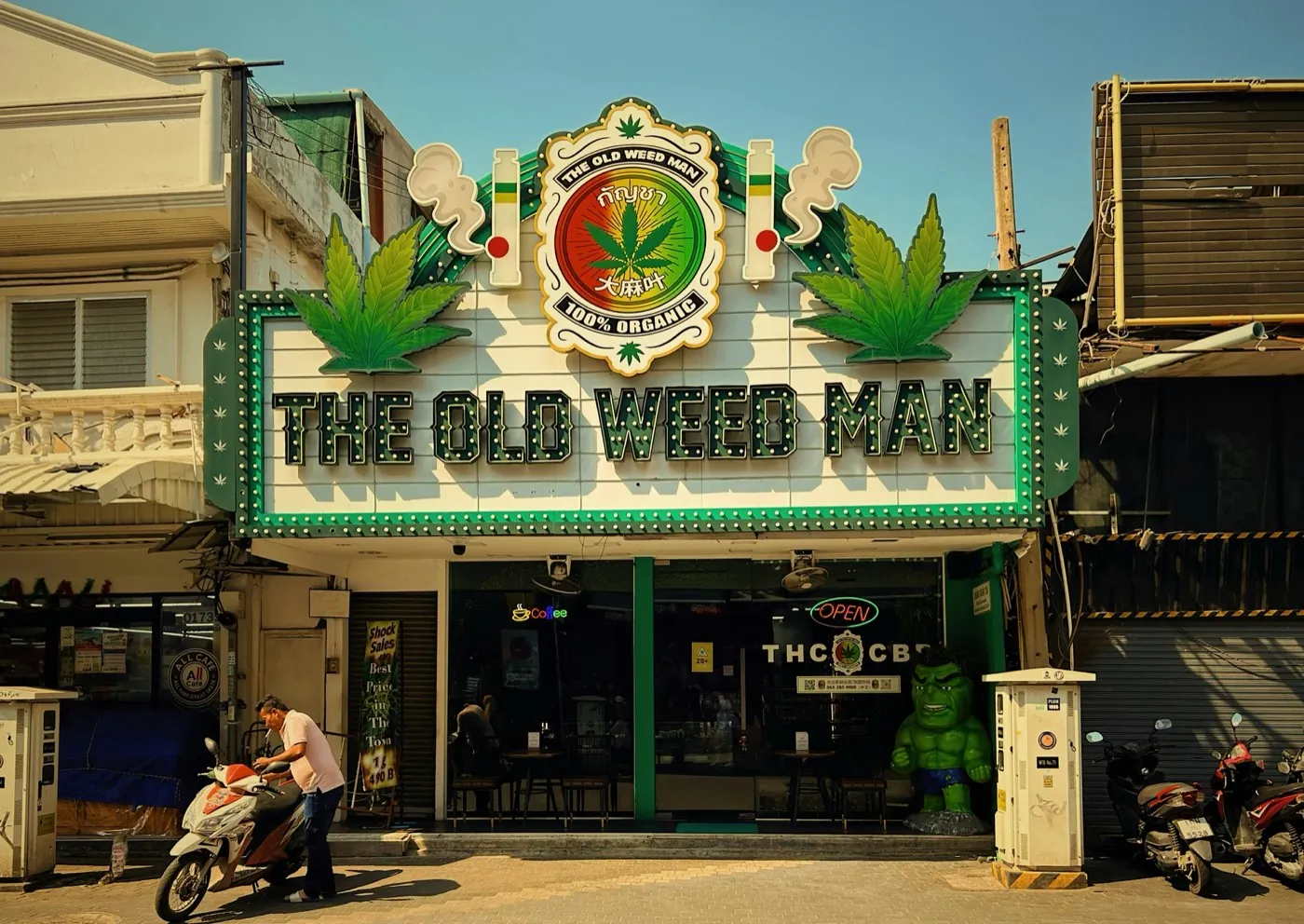
What followed was chaos in the best and worst ways. Dispensaries opened faster than 7-Elevens - more than eighteen thousand at the peak, in a country that already runs on convenience stores. The wild west arrived, complete with Khao San Road tourist traps selling overpriced flower of questionable origin and neon storefronts that couldn't tell you the difference between a sativa and a sandwich.
I was there for all of it. I walked into dispensary after dispensary - four years, 900 visits, enough questionable purchases to fill a dumpster - watching the industry figure itself out in real time.
The government pulled back in 2025, shifting to a medical-only framework requiring PT33 prescriptions. Thousands of shops closed. The neon got dimmer. But the shops that survived are - by and large - the ones that were doing it right. The ones with real products, knowledgeable staff, and actual compliance. The ones that treat the plant with the same respect that grandmother in her kitchen always did.
You might be thinking: I just want to know where to get good weed. Why am I reading about Nixon?
Because context shapes everything.
The reason dispensary quality varies so wildly in Bangkok is that the industry went from zero to eighteen thousand in two years, with minimal regulatory infrastructure. That's not a Thai problem - it's what happens when any country tries to undo a century of prohibition overnight. The U.S. is still figuring it out, state by state, with legal markets next door to states where the same product gets you five years.
The reason some shops have staff who'll stop you from making a rookie mistake while others are basically neon-lit vending machines is that Thailand is, right now, writing the rules for how a responsible Asian cannabis market should work. That's not trivial. They're building something that will likely become the template for the region.
And the reason I care enough to have walked into 900 of these places - a Level 7 Google Maps contributor, top 10% of reviewers globally - is that this plant matters. Not because it gets you high, though it does. But because a grandmother in Thailand knew exactly what to do with it, and it took the world ninety years to stop telling her she was a criminal for knowing.
The dispensaries on ThaiCannaMapped's Certified Bangkok list (our top-quality dispensary picks) are the ones that made it through the consolidation. Licensed. Verified. The kind of places that treat cannabis as what it always was - a plant with real applications, real culture, and real responsibility attached to it.
That's the filter. Not the neon. Not the star rating. Not the guy out front who calls you "boss" before you've said a word.
If you want to follow the journey of documenting what's real and what's noise in this market, I've been doing it on Instagram for years. For the deeper conversations about where this industry is going - the regulation, the culture, the business - Reefers Club is an invite-only community of people who have been in the room since before the law changed. And if you are curious how legitimate Thai cannabis brands are learning to communicate in a category that was illegal not long ago, that is the marketing and content work I do every day.
Prohibition didn't happen because cannabis was dangerous. It happened because it was useful - useful to the wrong people, in the eyes of those who held power. The science never supported it. The arrests never reduced usage. The war on drugs never achieved what it promised, and it destroyed millions of lives in the process.
Thailand looked at that history and chose differently. Imperfectly, chaotically, with more than a few growing pains - but differently. That matters.
The next time you walk into a Bangkok dispensary and the budtender asks you what you're looking for, remember that there was a time - not that long ago - when having that conversation in this country would have landed you in prison. And that a woman who is as old as my mother fought for thirty years to make sure that time ended.
It was always just a plant. It took the world a while to remember.
Written by someone who has walked into more Bangkok dispensaries than anyone probably should, and who still thinks about that conversation in a kitchen.
Historical claims in this article are based on documented sources including government records, academic research, and investigative journalism. Cannabis law varies by jurisdiction and changes frequently. Always verify current regulations before traveling. Legal cannabis use in Thailand requires compliance with current regulations, including PT33 prescriptions. Adults 20+ only.