Cannabis Basics
Honest notes from 900+ dispensary visits. Zero sponsored posts.
Get the lists
Every Bangkok dispensary menu organizes flower into three buckets. Sativa, indica, hybrid. The budtender's shorthand for these is consistent across every shop in the city: sativa is energizing, indica is relaxing, hybrid is somewhere in between.
Here's what they're not telling you: this framework is mostly folklore, and the science behind it is shakier than most people realize.
I'm not saying it's useless. There are patterns. The labeling gives you a starting point. But if you're making your Bangkok dispensary decision based entirely on "I want to feel alert so I'll buy sativa," you're working with an incomplete map. Here's the full one.
Cannabis sativa and Cannabis indica are botanically distinct species - or possibly subspecies, depending on which taxonomist you ask. The visual differences are real: sativas tend to grow tall with narrow leaves, indicas short and bushy with broader leaves.
But here's the problem: almost everything sold in Bangkok dispensaries, and in legal markets worldwide, is a hybrid. The "pure sativa" or "pure indica" on a menu is almost always a marketing category, not a genetic designation. Decades of crossbreeding mean that the plant you're smoking has genetics from both lineages, regardless of which bucket the budtender puts it in.
More importantly, the energizing/relaxing split that's supposed to map to sativa/indica isn't primarily about the plant type. It's about the chemical profile - the specific combination of cannabinoids and terpenes in that particular batch of flower. And those chemicals vary significantly even between plants of the same strain from the same grower.
A neuroscientist studying the endocannabinoid system would tell you that the effect cannabis has on you depends on which receptors get activated, at what concentration, for how long - and that's shaped by the terpene profile at least as much as the sativa/indica designation.
Two things matter more than the sativa/indica label:
Terpenes. These are the aromatic compounds that give cannabis its smell - pine, citrus, earth, diesel, berries - and they interact with cannabinoids to produce the overall effect. The main ones to know:
Myrcene - earthy, musky smell, associated with sedation and muscle relaxation. High-myrcene strains are the most likely to produce the "couch lock" feeling that people associate with indica. If you want to sleep, look for myrcene.
Limonene - citrus smell, associated with elevated mood and energy. High-limonene strains trend toward what people expect from sativa. If you want to feel bright and uplifted, look for limonene.
Pinene - pine smell, associated with alertness and memory retention. Some of the most focus-friendly strains are high in pinene.
Caryophyllene - spicy, peppery smell, the only terpene known to interact directly with the endocannabinoid system's CB2 receptors. Associated with stress relief and anti-inflammatory effects. The same compound in black pepper that some people use to manage cannabis anxiety.
Linalool - floral, lavender-adjacent smell, associated with relaxation and anxiety reduction without sedation.
Not every Bangkok dispensary tests for terpenes - many don't. But a good budtender can often tell you about a strain's dominant terpenes from smell and experience, which is more useful than "it's a sativa."
THC percentage. The number on the label is a starting point, not a verdict. But broadly: higher THC means stronger effect and a higher chance of anxiety at incorrect doses. For beginners, lower THC (10-15%) with an interesting terpene profile often produces a more enjoyable experience than a 25%+ strain that floors your receptors before you've decided if you like it.
Forget sativa/indica for a second. Ask yourself two questions:
What time is it, and what am I doing next?
3pm on a Tuesday, about to explore the city: you want something that keeps you functional - alert, engaged, maybe mildly elevated, not couch-locked. Look for high-limonene or high-pinene strains, often labeled sativa or sativa-leaning hybrid, THC in the 15-20% range.
9pm on a Friday, you're done for the day, you want to wind down: you want something that relaxes your body and quiets your brain. Look for high-myrcene strains, often labeled indica or indica-leaning, THC to your comfort level.
Somewhere in between, you're social and want to be present but relaxed: a well-balanced hybrid with some limonene and some myrcene, moderate THC, is probably your answer.
This is the "3pm Wednesday vs Friday evening" philosophy - not about the strain category, but about matching the effect to the moment. Your endocannabinoid system is in a different state at each of those times, which is why the same strain can feel different on different days.
Walk in. Tell the budtender the two-question framework: what time it is and what you're doing next. Watch how they respond. A budtender who asks follow-up questions - "how's your tolerance?", "do you prefer more of a body feeling or a head feeling?", "are you sensitive to anxiety?" - is someone worth listening to. A budtender who immediately points you to the premium shelf is not.
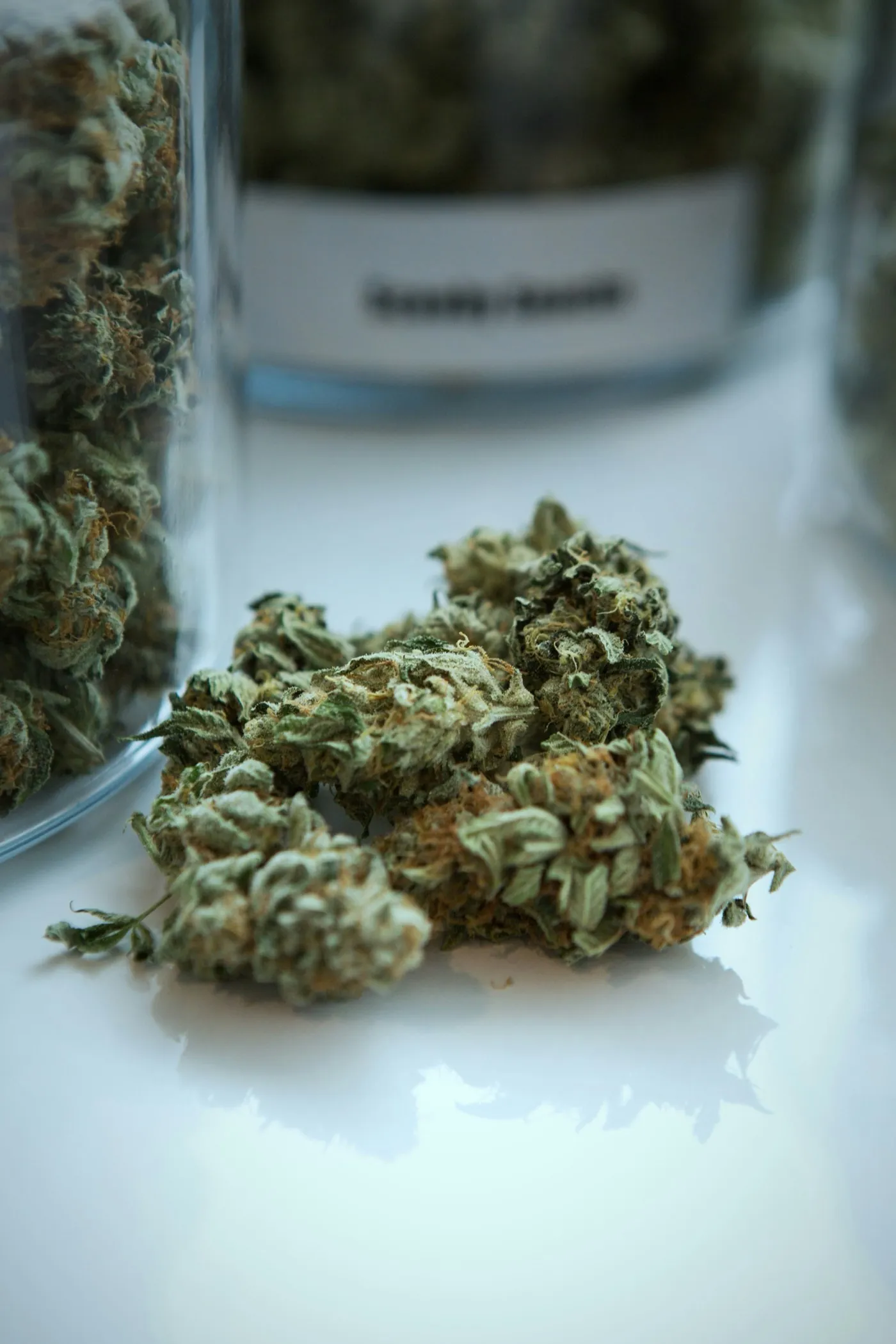
Then smell the jar. If a high-myrcene strain is supposed to be earthy and musky but it smells like nothing, the terpenes have degraded. The chemical profile that makes it work is gone. You're buying dried plant matter with a label.
The dispensaries on ThaiCannaMapped curate specifically for this. The For The Productive Ones list (our co-working dispensary picks) is shops with daytime-appropriate, functional strains and staff who understand the 3pm use case. The Mindful High list is shops where the evening wind-down experience is treated with genuine care - the right strains, properly stored, with guidance that goes beyond "it's indica."
Sativa vs indica is a useful starting point. It's not a reliable destination. The actual destination is a strain with the right terpene profile for your moment, at the right THC dose for your tolerance, chosen with the guidance of someone who knows the product.
That's more complicated than a two-bucket system, but it's also why the best Bangkok dispensary experience is so different from walking in blind and pointing at the menu.
I share which strains and which shops consistently deliver on this - sativa, indica, or otherwise - on Instagram. The terpene conversations inside Reefers Club go deep. And in the content I make for Thai cannabis brands, I push past the sativa/indica binary toward something that actually tells people what they are buying.
The label is the beginning of the conversation. The smell is the middle. The right budtender is the end.
Written by someone who has asked hundreds of Bangkok budtenders "what does it smell like?" and learned to read a lot from the answer.
This article is for educational purposes only. Cannabis affects everyone differently. Legal cannabis use in Thailand requires a PT33 prescription. Adults 20+ only.