Medical Cannabis
Honest notes from 900+ dispensary visits. Zero sponsored posts.
Get the lists
You have landed in Bangkok. You have your PT33 prescription. You have bought a gram of something the budtender promised would make the sunset look like a Rothko. You step back onto the pavement, and the question nobody asked during the planning phase arrives all at once:
Where am I supposed to smoke this?
Not on the street. Not on the BTS platform. Not in the park. Not in the temple, obviously. And not, these days, inside the shop that just sold it to you.
The legal guides tell you what is banned. The dispensary does not ask what you do next. The travel blogs are either reckless or so cautious they tell you not to bother. After 900+ dispensary visits in this city, here is the practical answer.
Public places: no. Inside the dispensary: no, and this one changed. Hotels: only if the hotel says yes. Private rentals: your best option, with the owner's written permission.
Now the detail.
Since 2022, cannabis smoke in a public place has been treated as a public nuisance under Thailand's Public Health Act. The penalty most widely reported is a fine of up to 25,000 baht and up to three months in jail.
Public means more than the street. Pavements, parks, beaches, markets, BTS and MRT stations, bus stops, malls, restaurants and bars all count. Selling is also banned at temples, dormitories, parks, zoos and amusement parks, which tells you how the authorities see those places.
The detail that catches people out: the smell is the problem, not just the act. If your smoke drifts to someone else, you have created the nuisance. A balcony feels private until the wind carries it next door. An empty soi at midnight feels empty until a security guard walks past.
Your prescription does not change any of this. A PT33 covers buying and possessing. It is not a licence to smoke wherever you like.
This is the biggest change since my first version of this post, and it is the one most visitors still get wrong.
The ministry rules ban selling cannabis for smoking on the premises, except during treatment by a licensed practitioner. Under the penalty scale announced in June 2026, allowing it can now cost a shop its licence entirely.
So the consumption lounges you saw in 2023 videos are, for practical purposes, finished. If a Bangkok shop still waves you through to a smoking room, understand two things. The shop is risking its licence, and you are sitting in the middle of the risk with them. Inspections are frequent: more than 2,000 Bangkok shops had been inspected by late May.
The dispensary is for buying. Somewhere else is for smoking.
There is no specific law on hotels. It comes down to the hotel's own policy, plus the nuisance rule if your smoke bothers other guests. In practice that means it depends entirely on the property.
Some hotels allow it in rooms. Some charge a cleaning fee if housekeeping smells it. Most have no formal policy, which means nobody minds until a neighbour complains.
How to handle a hotel:
Ask at booking, not at checkout. "Do you allow cannabis use in rooms?" is a normal question in Bangkok now. A clear yes is fine. A clear no means no. A vague answer means they will tolerate it until somebody complains.
Stay off the balcony. It is the riskiest spot in any hotel. Wind is unpredictable and drifting smoke is exactly what the nuisance rule targets.
Contain it. Windows shut, bathroom fan on, short sessions, towel under the door. Leave the vape pen at home: Thailand bans e-cigarette devices outright, and that is a separate fight you do not want.
An Airbnb or private rental where the owner has said yes in writing is the most comfortable place to consume in Bangkok. No law expressly blesses private use, but private spaces are where the medical system expects consumption to happen, and the nuisance rule only bites when the smoke reaches other people.
Ask before you book. "Is cannabis use permitted in the property?" Plenty of hosts in tourist areas get this question weekly and will answer straight. Some list their places as cannabis friendly. If the answer is no, find another listing.
Get it in writing. A message in the booking app is enough. It protects you if a cleaning fee appears after checkout.
Serviced apartments sit in between. Private space, but managed buildings with staff and neighbours. Ask first, contain the smell.
From four years and 900+ visits, safest to riskiest:
Safest: a private rental with written permission from the owner.
Safe with conditions: a hotel room in a hotel that has said yes, windows closed, off the balcony.
Risky: a hotel room without asking, any balcony, any shared terrace.
Do not: streets, parks, beaches, transport, bars, and the dispensary itself.
During the open era, cannabis cafes and smoking bars ran openly across Bangkok. Some are still trading, many as places that sell coffee, food or merchandise rather than a place to light up. Under the current rules, a business that lets customers smoke cannabis on site is taking a serious licence risk, unless it is a genuine clinical setting with a practitioner treating patients.
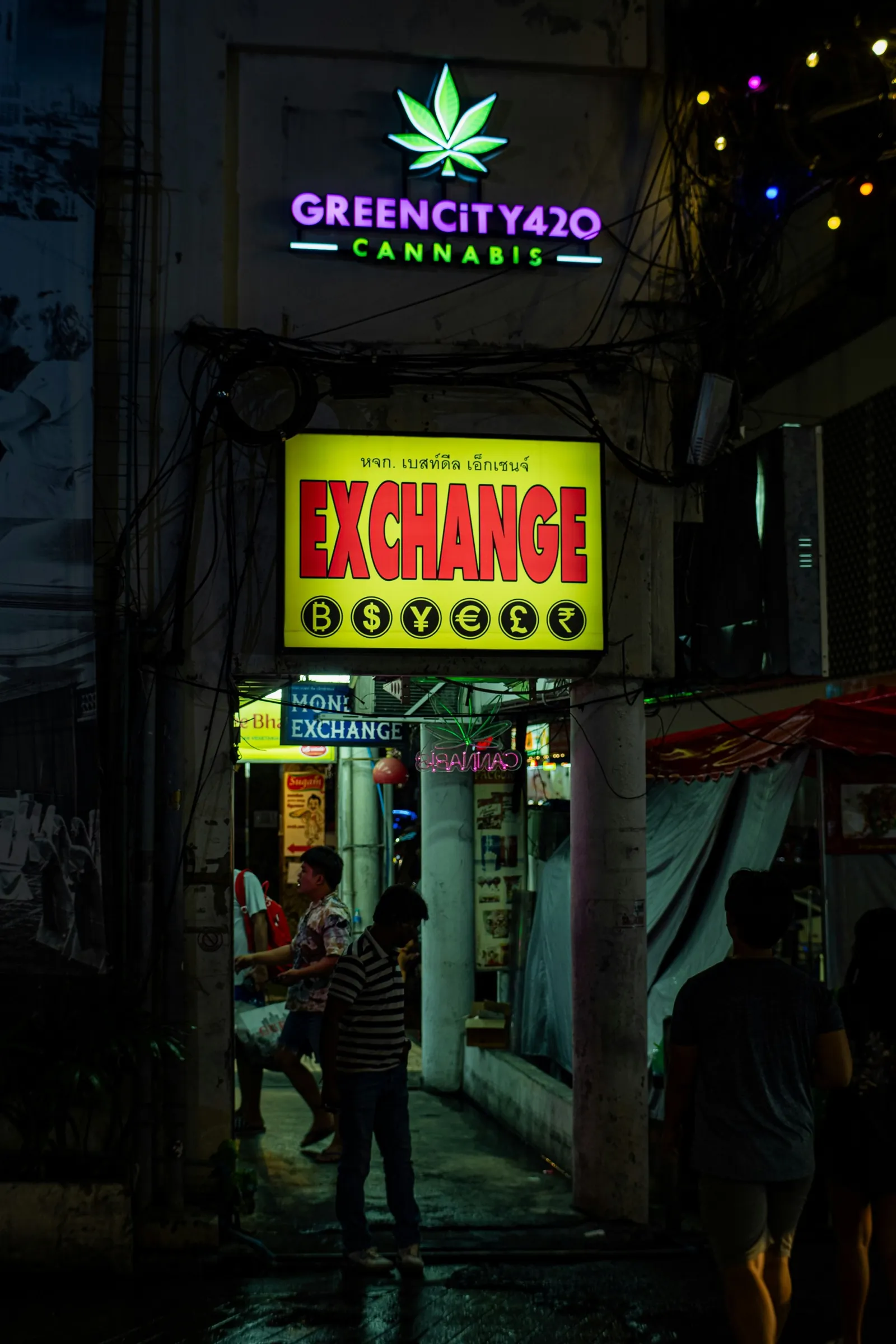
If you find a place that still offers it, look past the neon. Check its licence sticker, or look it up on the ThaiCannaMapped Dispensary Register. If it is not licensed for what it is doing, neither are you while you sit there.
Can you smoke weed in public in Thailand? No. Cannabis smoke in a public place is treated as a nuisance under the Public Health Act, with a widely reported penalty of up to 25,000 baht and up to three months in jail. A prescription does not change that.
Can you smoke in a Bangkok hotel? Only if the hotel says yes. There is no specific law on hotels, so the hotel's own policy decides, plus the nuisance rule if your smoke reaches other guests. Ask at booking and stay off the balcony.
Can you smoke inside a dispensary? No. Shops are banned from selling cannabis for smoking on the premises, except during treatment by a licensed practitioner, and allowing it can cost a shop its licence. Buy at the counter and consume somewhere private.
Can tourists smoke weed in Thailand? Yes, in private, with flower bought legally. That means a PT33 prescription from a Thai licensed practitioner, a licensed shop and being 20 or older. The same consumption rules apply to tourists as to everyone else.
The consumption rules are the price of having a legal market at all. Thailand could have gone the Amsterdam route of illegal but tolerated. Instead it built a medical framework with real rules about where cannabis is used. They can feel like a hassle on a beautiful Bangkok evening.
But they are why the market survived, why the shops got more legitimate instead of less, and why you are buying tested flower from a licensed counter instead of lawn clippings from a stranger on Khao San Road. If you are new to all this, start low. Here is what happens if you smoke too much, so you know what you are dealing with.
I share the smarter ways visitors are handling this on Instagram. The conversations about how Bangkok's cannabis culture is adapting to the new rules happen inside Reefers Club. And helping licensed shops explain the consumption rules to customers without breaking the advertising ban is part of my marketing and content work.
Find the right space. Respect the rules. Enjoy the sunset.
Written by someone who has smoked in more Bangkok locations than he should probably admit to and now knows exactly which ones to recommend.
This article is for informational purposes only and does not constitute legal advice. Consumption rules in Thailand change and enforcement varies. Public consumption is not permitted regardless of prescription status. Adults 20+ only.