Cannabis Basics
Honest notes from 900+ dispensary visits. Zero sponsored posts.
Get the lists
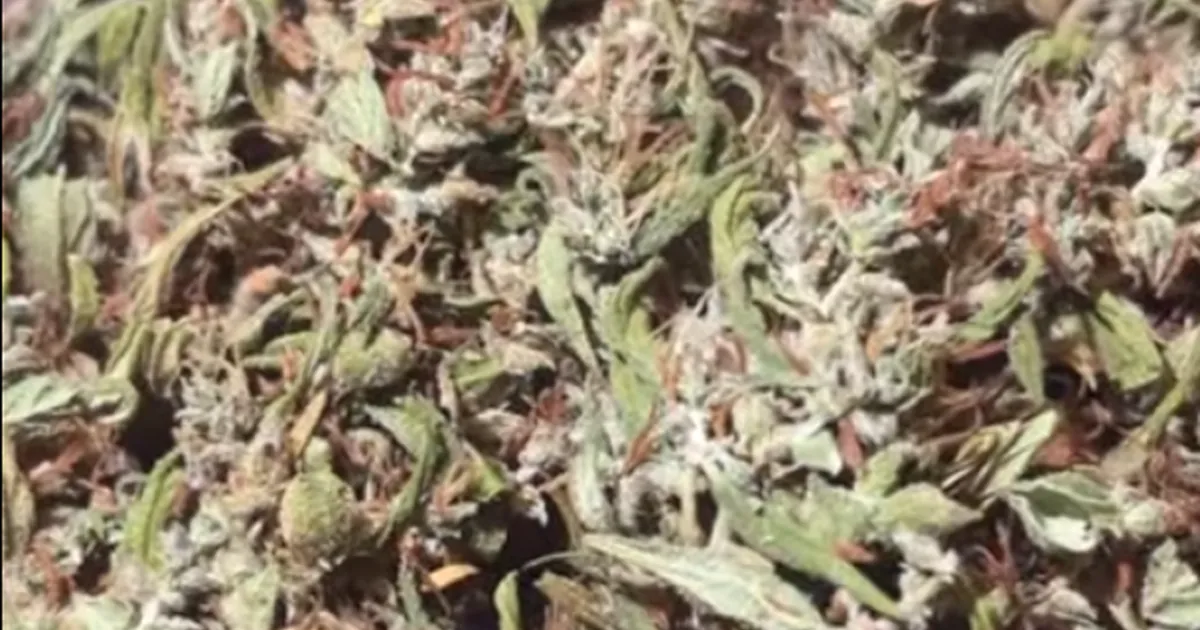
The best name in Thai cannabis is not on any Bangkok menu. It is Hang Kra Rog, which means squirrel's tail.
Thai researchers use it for a traditional cultivar from the Phu Phan mountains in Isan, named for long flowers that look like a squirrel's tail. Its cousin is Hang Suea, the tiger's tail. These are Thai names, not marketing names invented in California.
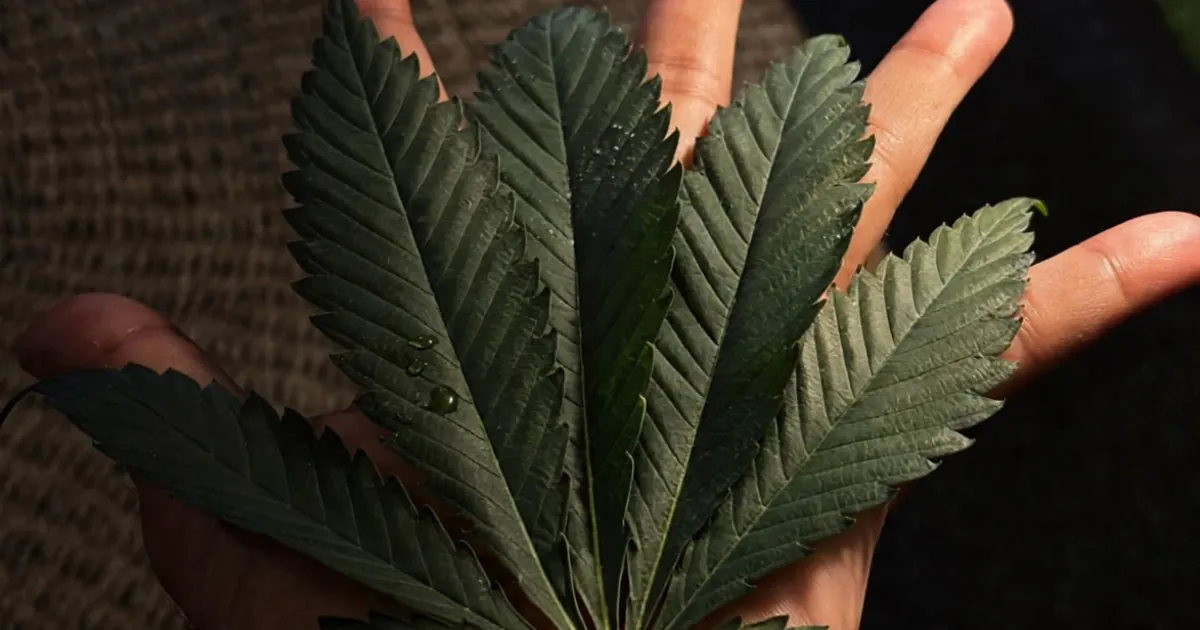
Thai landrace strains are cannabis varieties that Thai and Lao farmers grew and reseeded locally for generations, almost all tall, slow flowering sativas. The best documented today are Hang Kra Rog Phu Phan from the Phu Phan range in Sakon Nakhon, Hang Suea Sakon Nakhon, and two Tanao Si lines, all put forward for official registration by Thai institutions. Collectors also preserve lines from Sakon Nakhon, Kanchanaburi and Chiang Rai. Famous Thai weed strains like "Thai" and "Chocolate Thai" survive mainly as seed company lines and in the ancestry of modern hybrids.
If you came here from the legend, what a Thai stick is explains how these plants became famous.
A landrace is a domesticated, locally adapted, traditional variety that developed gradually as it adapted to its surroundings and to local farming, largely isolated from other populations. In cannabis it means seed saved and replanted by farmers in one region, not a breeder's cross.
Thai landraces share a family look. Seed collectors describe tall plants, often two to three metres outdoors, with long, airy flowers. Flowering is slow. Collector listings for Thai lines run from about 12 to 18 weeks of flowering, and Leafly describes Thai as hard to grow outside the tropics.
They were shaped by places like Isan, a plateau of 20 provinces bordered by the Mekong and Laos. Historian Peter Maguire, writing in The Diplomat, describes Isan's silty Mekong soils as ideal for the crop. He told VOA that the famous Thai weed came from Isan and from Laos, and that Lao and Thai growers were "incredibly sophisticated" long before Westerners arrived.
This is the part the English language strain sites miss. Thai institutions have been documenting native cultivars since cannabis research reopened.
The best studied Thai landrace by far. Researchers in Sakon Nakhon explain that Phu Phan is a mountain range in northeastern Thailand, mostly in Sakon Nakhon province with parts in Kalasin, and that the name comes from flowers resembling a squirrel's tail. One paper calls it "Thai stick cannabis".
In 2025, Thai scientists published the first whole genome sequence of Hang Kra Rog Phu Phan, describing it as an indigenous cultivar with a long history in traditional medicine. They found it unexpectedly close, genetically, to a CBD dominant cultivar called CBD Shark.
The sources do not agree on its chemistry. The sequencing paper says the cultivar is known for high THC. A Department of Agriculture registration document for the selected line Hang Kra Rog Phu Phan ST1 lists it as a type 2 plant, with THC and CBD at roughly one to one. Different selections of the same landrace can differ, so both may be true of different plants.
A 2026 study in Kasetsart University's agriculture journal worked on feminised seed for Hang Kra Rok because, grown from ordinary seed, it throws unwanted male plants. That is the same problem Leafly cites for why the original Chocolate Thai is so hard to keep alive.
The tiger's tail. The same registration document lists Hang Suea Sakonnakhon TT1 as a type 1 plant, THC dominant with very little CBD. It was one of four Thai lines presented at a Bangkok ceremony in 2021, when Pattaya Mail reported the Public Health Minister expected the Department of Agriculture to register them.
Tanao Si is the Thai name for the Tenasserim range on the Thai and Myanmar border. Two lines carry it: Tanao Si Kan Khaw WA1 and Tanao Si Kan Dang RD1. The registration document lists Kan Khaw as type 1, THC dominant. I could not find chemistry for Kan Dang.
The registration document says these lines trace to seeds obtained under a cannabis amnesty notice of May 2019, then grown out over three generations by the Department of Medical Sciences with Mahidol University and Rajamangala University of Technology Isan. My reading: some of Thailand's native lines survived quietly in private hands until it was safe to declare them.
In 2018, Prachatai reported that a national farmers' council chose Sakon Nakhon for a planned medical cannabis farm, calling it the origin of the Thai stick. Thai universities run cannabis research there. If the Thai stick has a hometown, Sakon Nakhon and the Phu Phan hills make the strongest local claim, though other accounts credit hill tribes or Isan in general, and no source can prove a single birthplace.
Outside Thailand, seed collectors have preserved Thai lines under place names. Here are three listed on Seedfinder from The Landrace Team, one of them credited to a seed preservation exchange.
Thai Stick Sakhon Nakhon. Described as coming from Sakon Nakhon. Flowering of about 12 to 18 weeks, fruity aroma, energetic and long lasting effect, and good mould resistance.
Kanchanaburi. From western Thailand, sold as "Kanchanaburi Pure Thai Sticks". Plants up to three metres or more, 14 to 18 weeks of flowering, citrus, mandarin peel and lime aroma.
Thai Chiang Rai. From the northeast of Chiang Rai province. Up to two metres outdoors, 12 to 16 weeks of flowering, papaya and dragonfruit aroma.
These descriptions come from the collectors themselves, not independent labs. Treat them as a guide to what Thai landraces are like, not as lab results.
Most English pages about Thai weed strains list these three.
Thai. Leafly lists it as a pure sativa landrace, about 19% THC, energising and focused, and an ancestor of Haze, Voodoo and Juicy Fruit.
Chocolate Thai. Leafly calls it a legendary landrace that reached the US as Thai sticks in the 1960s, and says the original most likely no longer exists. I go deep on it in the Thai stick strain guide.
Wild Thailand. Verilife lists it as a Thai landrace descendant, pure sativa, with THC ranging widely by breeder.
Verilife also makes an important point: "Thai landrace" is a broad label for sativa grown across Southeast Asia, and Laotian farmers grew much of it. Thai and Lao genetics are hard to separate, which fits Maguire's account.
Muay Thai is not a landrace. It is a modern strain built on one. Seedfinder lists Muay Thai from Flash Seeds as an autoflowering line, probably a cross of a Phuket landrace with a strain called Stitch. AllBud lists it as about 95% sativa, from a Thai landrace crossed with Stitch.
So if you see Muay Thai on a menu, you are getting a fast flowering modern plant with some Thai sativa blood. And if you came here for the sport, I wrote about cannabis and Muay Thai recovery in Bangkok.
Thailand has also started breeding its own. mg Magazine reports that Maejo University developed Issara 01, a cross of a local and a foreign strain, and describes Thailand as the first country to develop its own strain specifically for its legal medical programme. It is a Thai cultivar, but not a landrace.
People ask me where to buy Thai landrace seeds. I do not link seed sellers, and here is why.
Thailand. Flower now sits inside a medical system with licences across the chain. Growing for sale needs a licence. The registration work above happened inside licensed research programmes.
Crossing borders. Taking cannabis out of Thailand is illegal under customs law, and bringing it in is treated as importing a controlled substance. I would not carry seeds across any border. Read do not take weed home from Thailand before you even think about it.
At home. Seed laws differ hugely between countries. Check yours.
If your interest is preservation, the most valuable thing you can do is support Thai institutions and licensed Thai farms keeping these lines alive.
Rarely, and you have to ask. Most Bangkok shelves carry modern hybrids, often Thai grown from imported seed. Thai grown and Thai genetics are not the same thing.
When a shop does have a native line, it can usually name the farm. Ask what you want to feel, because Thai sativas behave differently from dense indoor hybrids. My sativa vs indica vs hybrid guide helps. I cover where to look in can you still buy a real Thai stick in Bangkok, and how the old sticks were cured in how a Thai stick is made.
The legal path is the same as for any flower: a PT33 prescription and a licensed shop, which you can check on the ThaiCannaMapped Dispensary Register.
More than I expected when I started digging. The 1970s plants were eradicated from the fields, a story I tell in Thai stick in the 1970s. But the genetics survived in farmers' hands, came back through the amnesty, and are now being sequenced and registered by Thai scientists. The squirrel's tail is still here.
I keep documenting Thai cannabis on Instagram, and native Thai lines are the story I most want to tell. The growers and researchers who care about this heritage talk inside Reefers Club, an invite only community of people in the Thai cannabis industry. And if you are a licensed farm or shop working with native genetics, telling that story well is the marketing and content work I do.
For licensed Bangkok shops worth your time, start with the curated lists.
Written by someone who now asks every Bangkok budtender the same question: do you have any squirrel's tail?
This article is for general information only and is not legal, medical or growing advice. Strain descriptions are as reported by researchers, government documents and seed databases. Legal purchase of cannabis flower in Thailand requires a PT33 prescription and a licensed shop. Adults 20+ only.